
We go
where risk
rules out
conventional
plant.
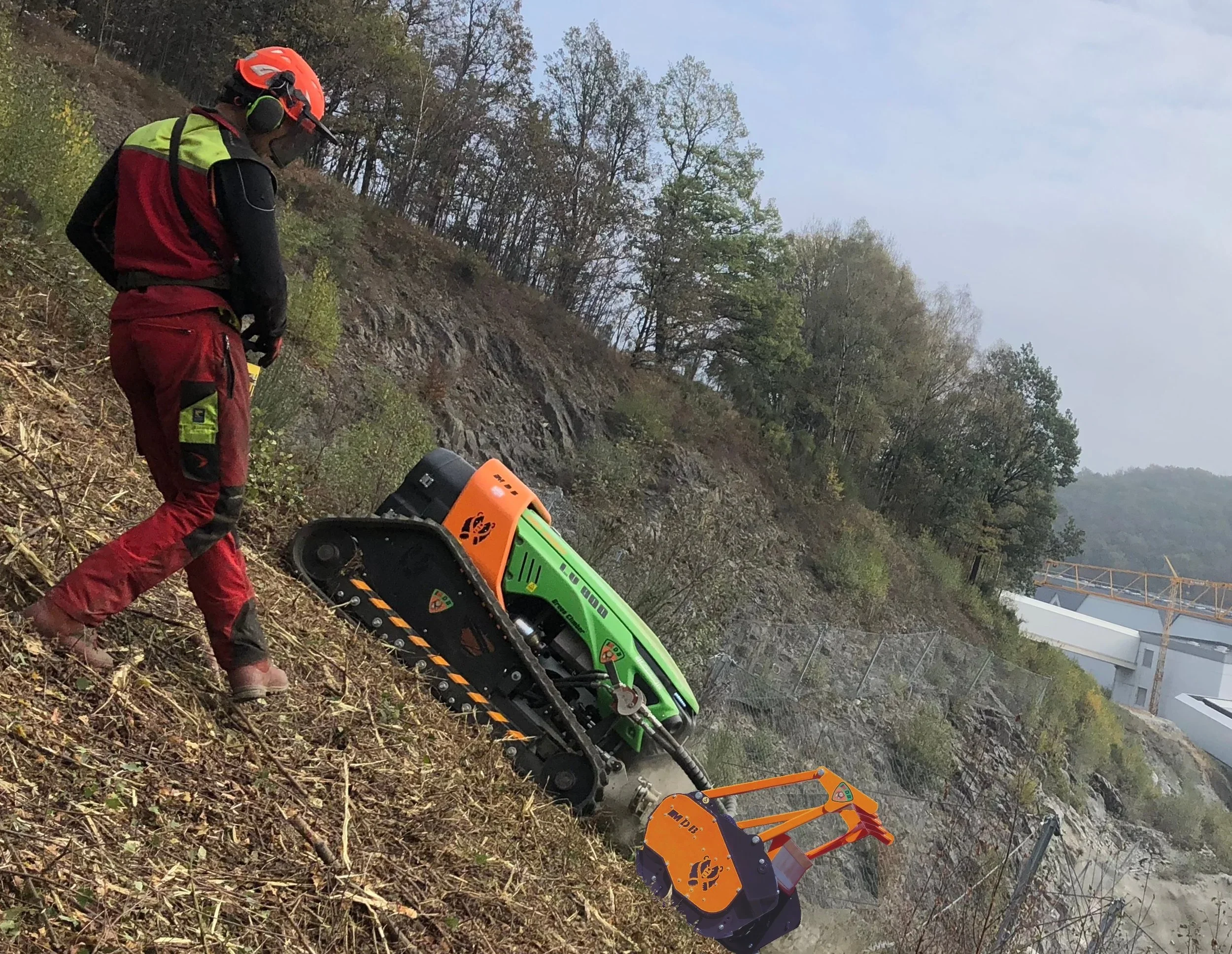
Remote-controlled slope mowing, forestry mulching and mechanical bushfire mitigation for steep, unstable, difficult-access and access-constrained sites. Operator exposure reduced. Documentation available for compliance review.
Dense bush to
defensible space.
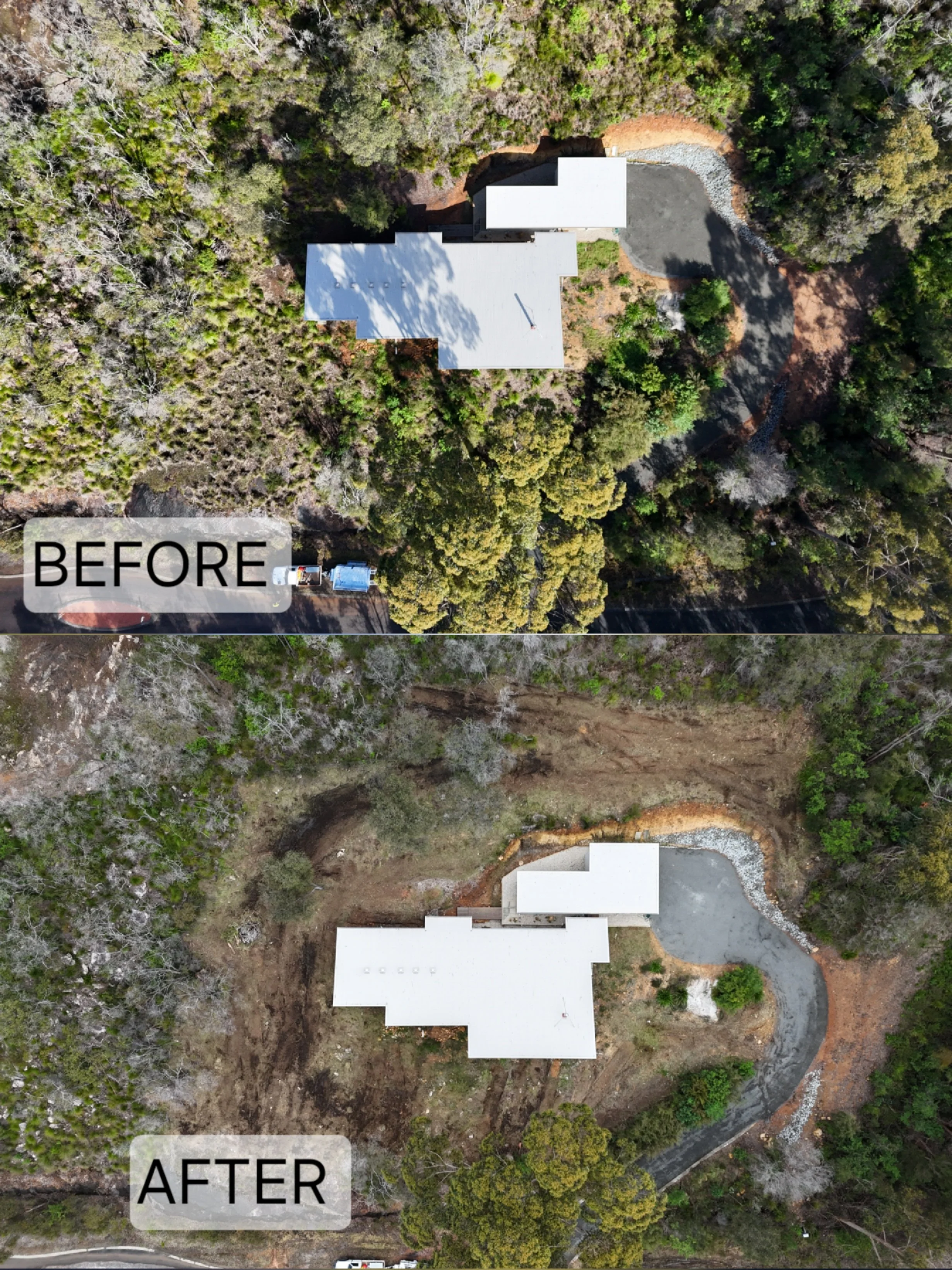
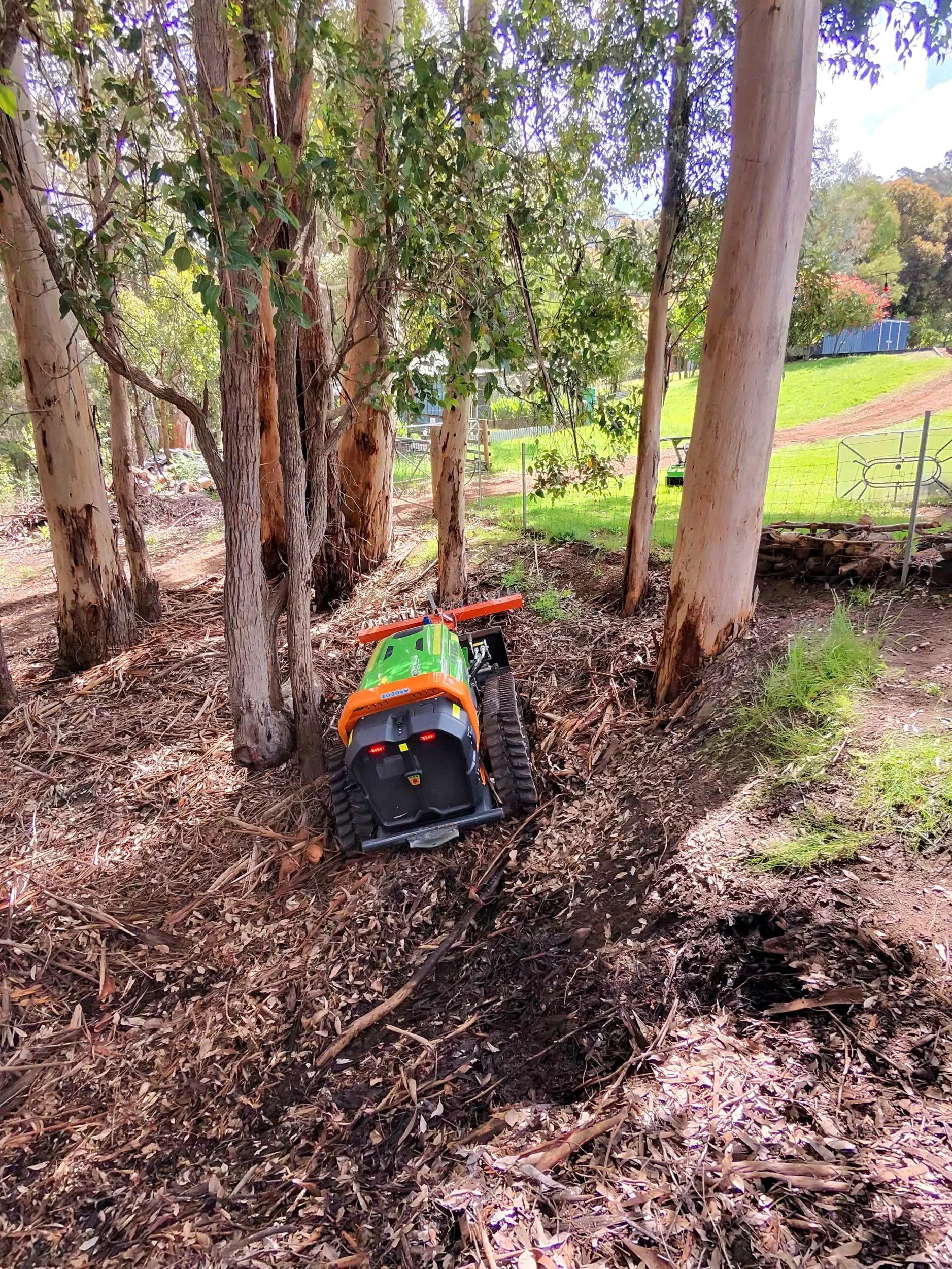
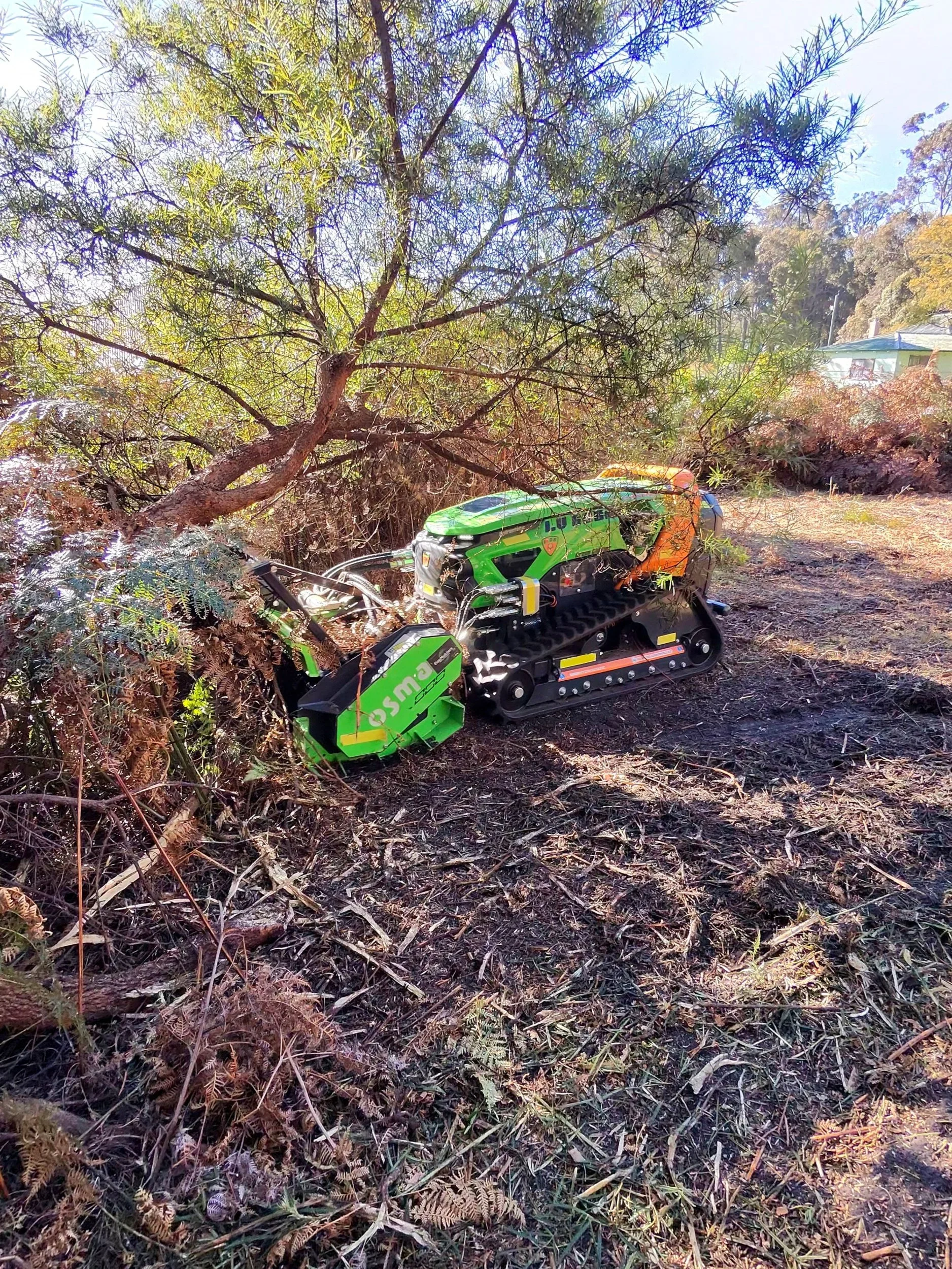
Overgrown bushland around a home, reduced to a clean, manageable fire buffer by remote-controlled mulching, with the operator kept off the slope the whole time.
- WorkMechanical bushfire mitigation
- MethodRemote-controlled forestry mulching
- AreaGreat Southern WA
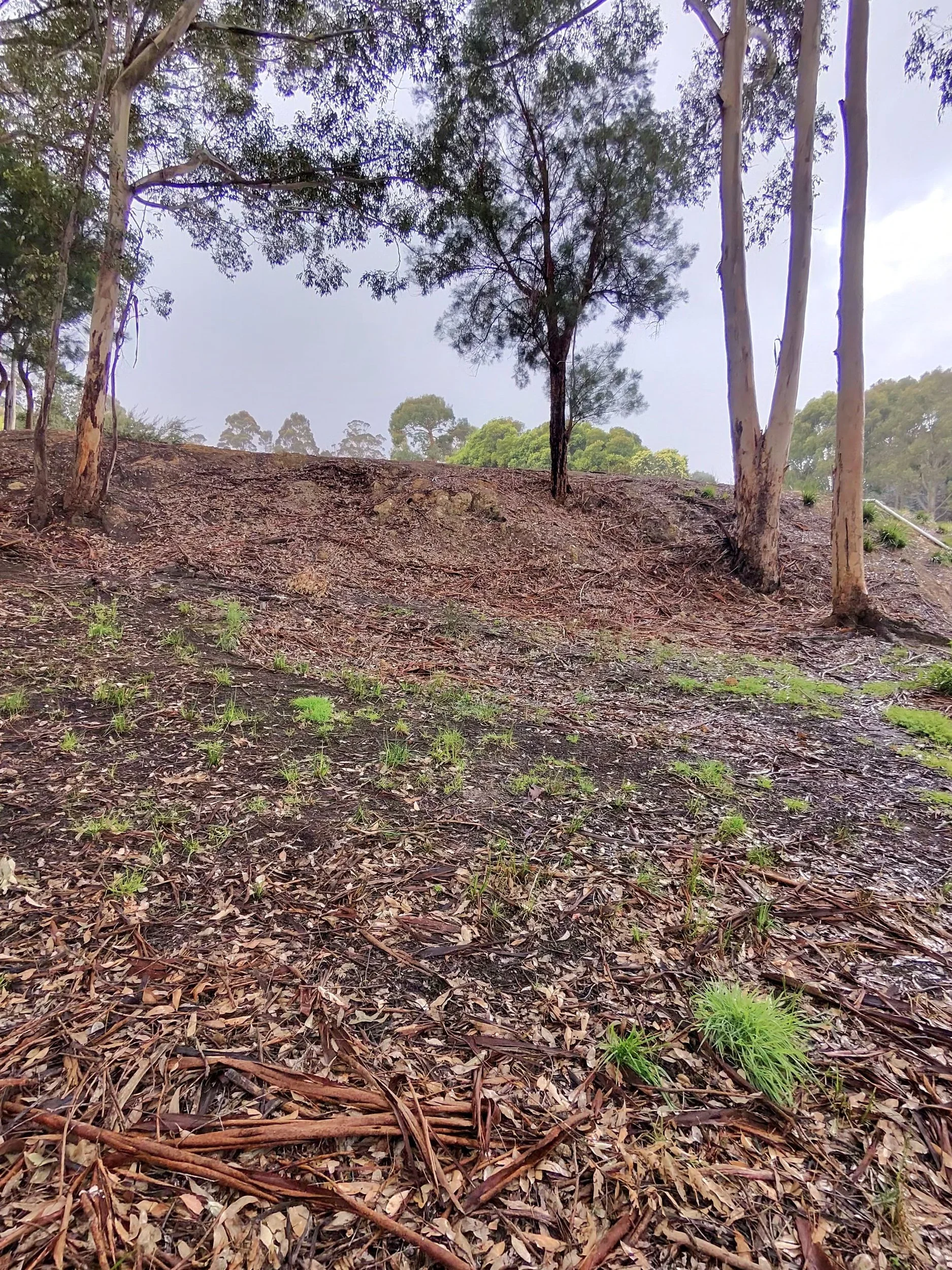
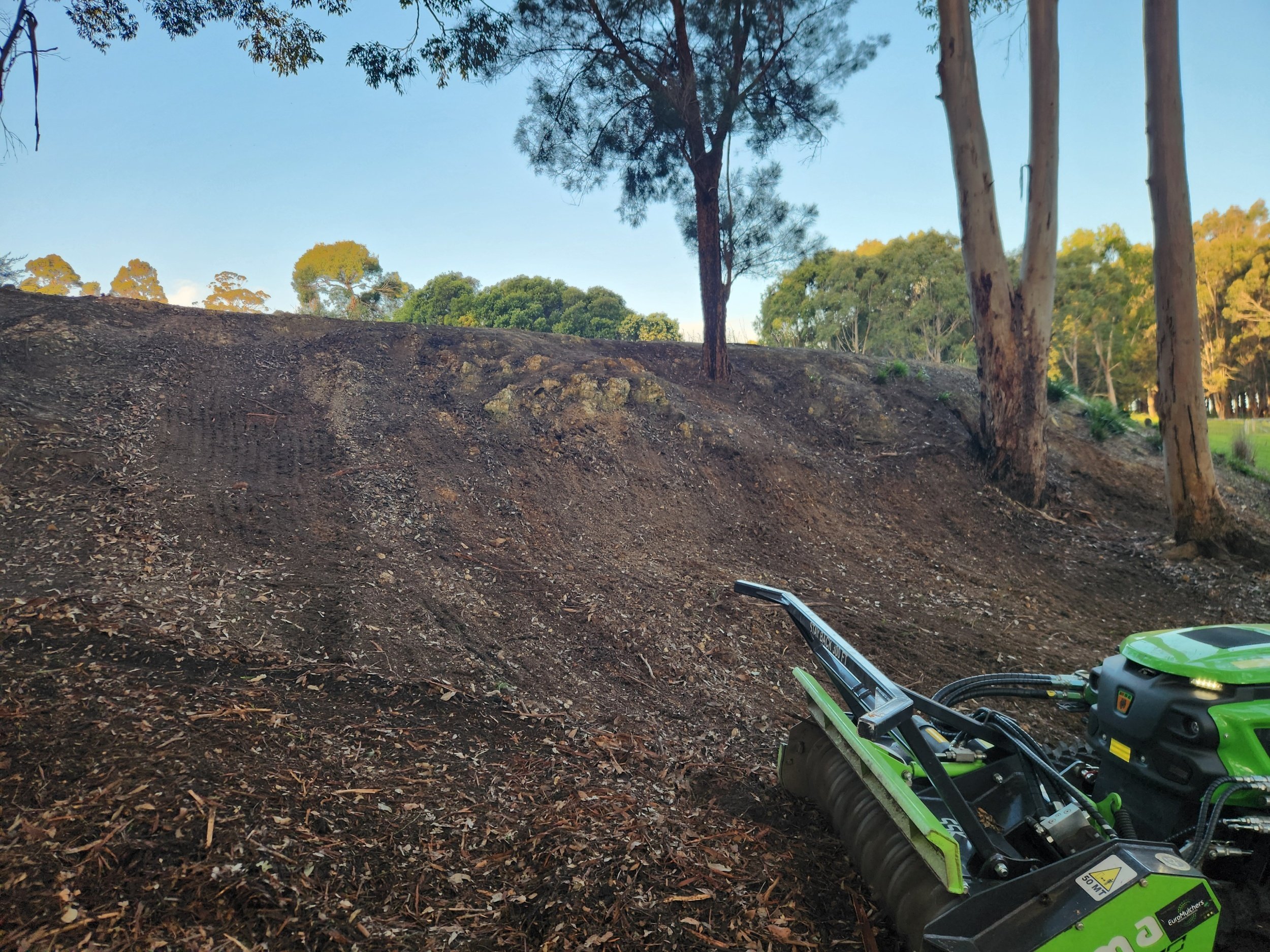
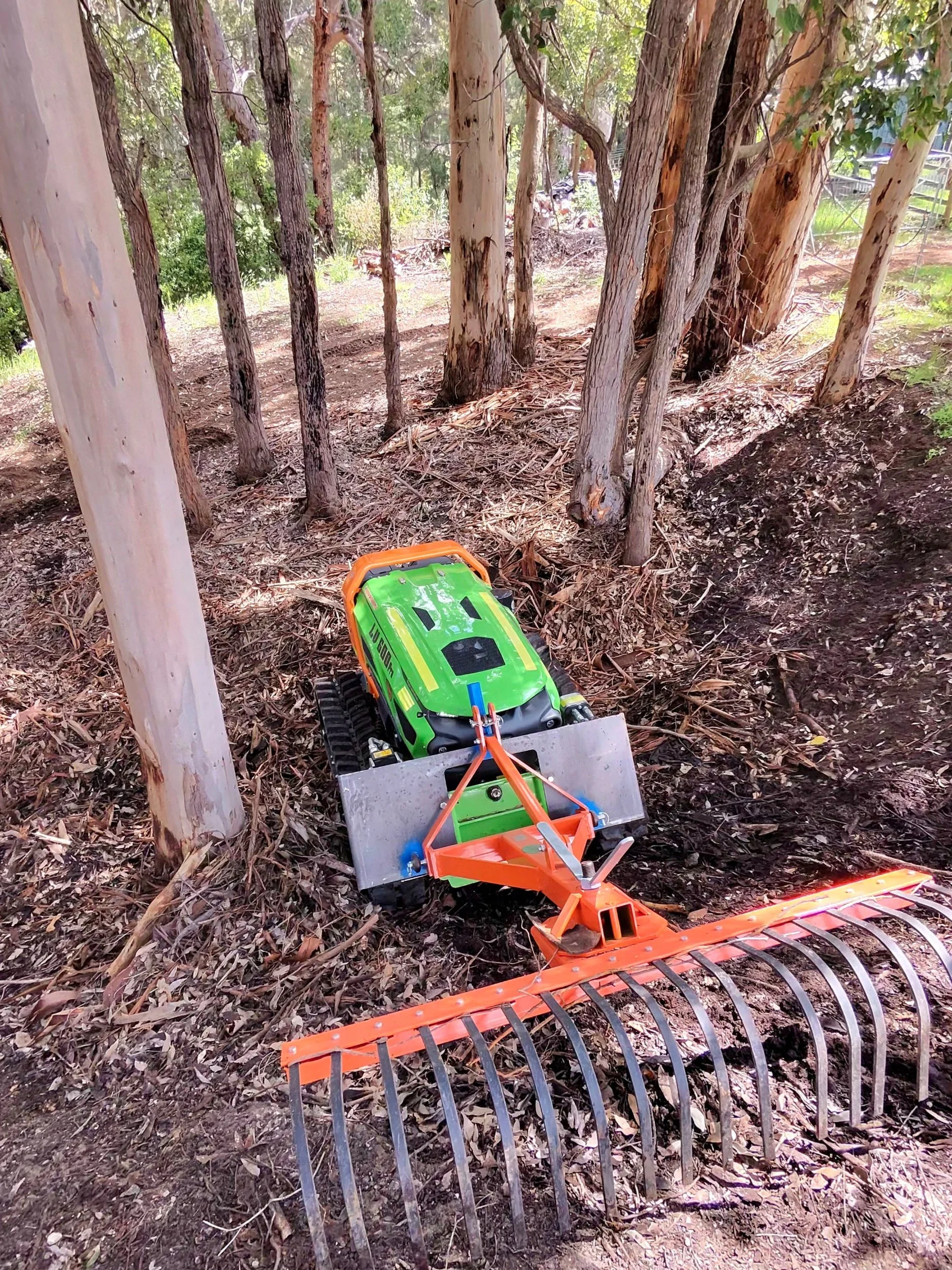
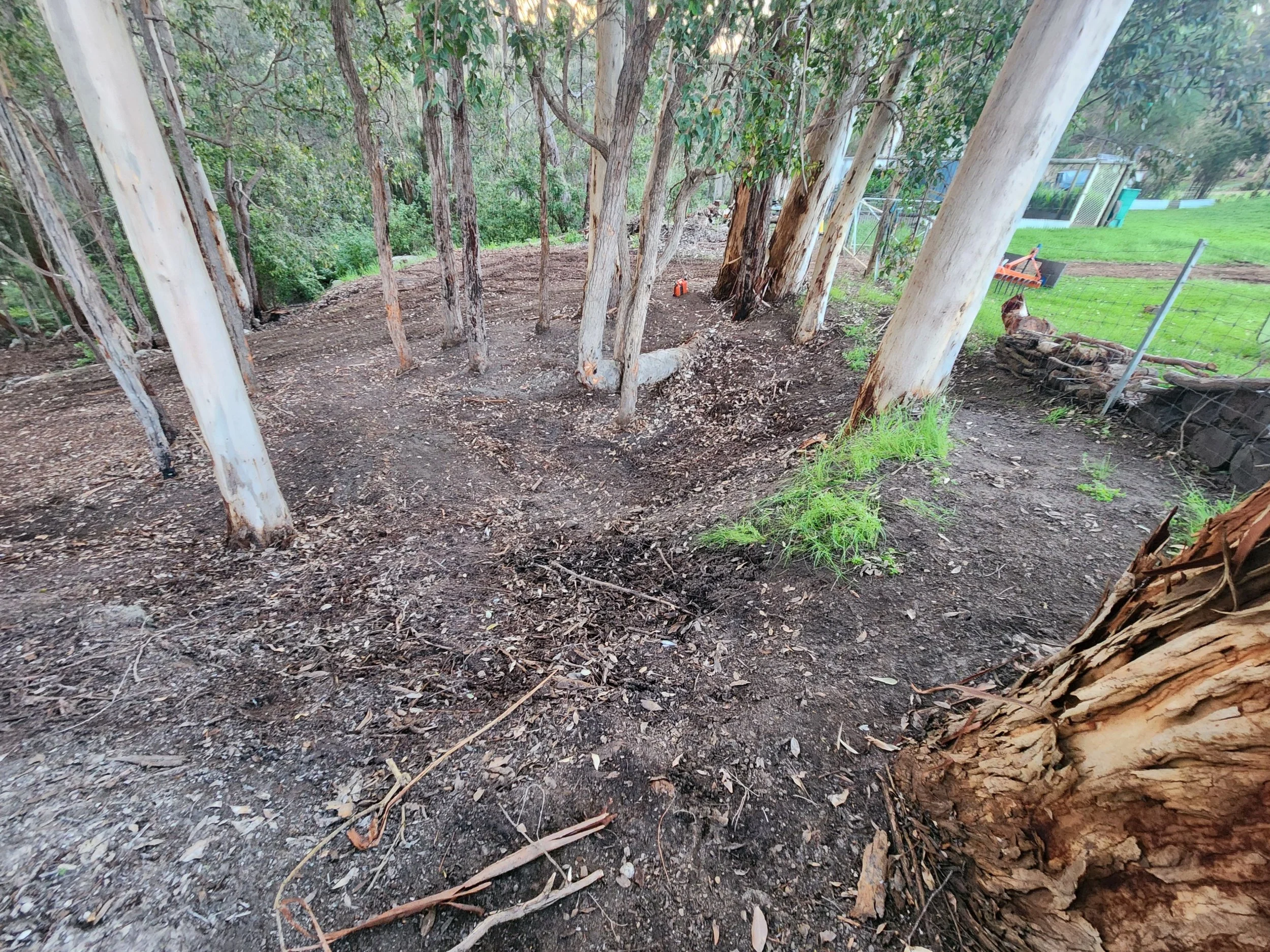
Same bank, same trees. Leaf litter, fallen bark and scrub mulched down into a low, even layer that stays on the slope as ground cover. Less fuel, no bare soil, trees kept.
Find your property on the satellite map, draw the area, and get an indicative price range straight away.
Draw my siteTell us about the vegetation, ground and access. We review it and come back to you with scope and pricing.
Start the estimatePick a day and time. We walk the site with you, talk through what you need, and follow up with a written quote.
Pick a timeNot a general
contractor.
A risk control
measure.
When terrain is steep, ground is unstable, or access is constrained, conventional manned plant doesn't just become inconvenient — it becomes a liability. ARC11 exists for exactly those situations.
We're engaged by councils, utilities, and infrastructure managers when the safety case for standard machinery can't be made — and when the method of engagement needs to be defensible.
The right call
when the risk
calculus changes.
ARC11 is typically engaged when one or more of the following conditions exist on site:
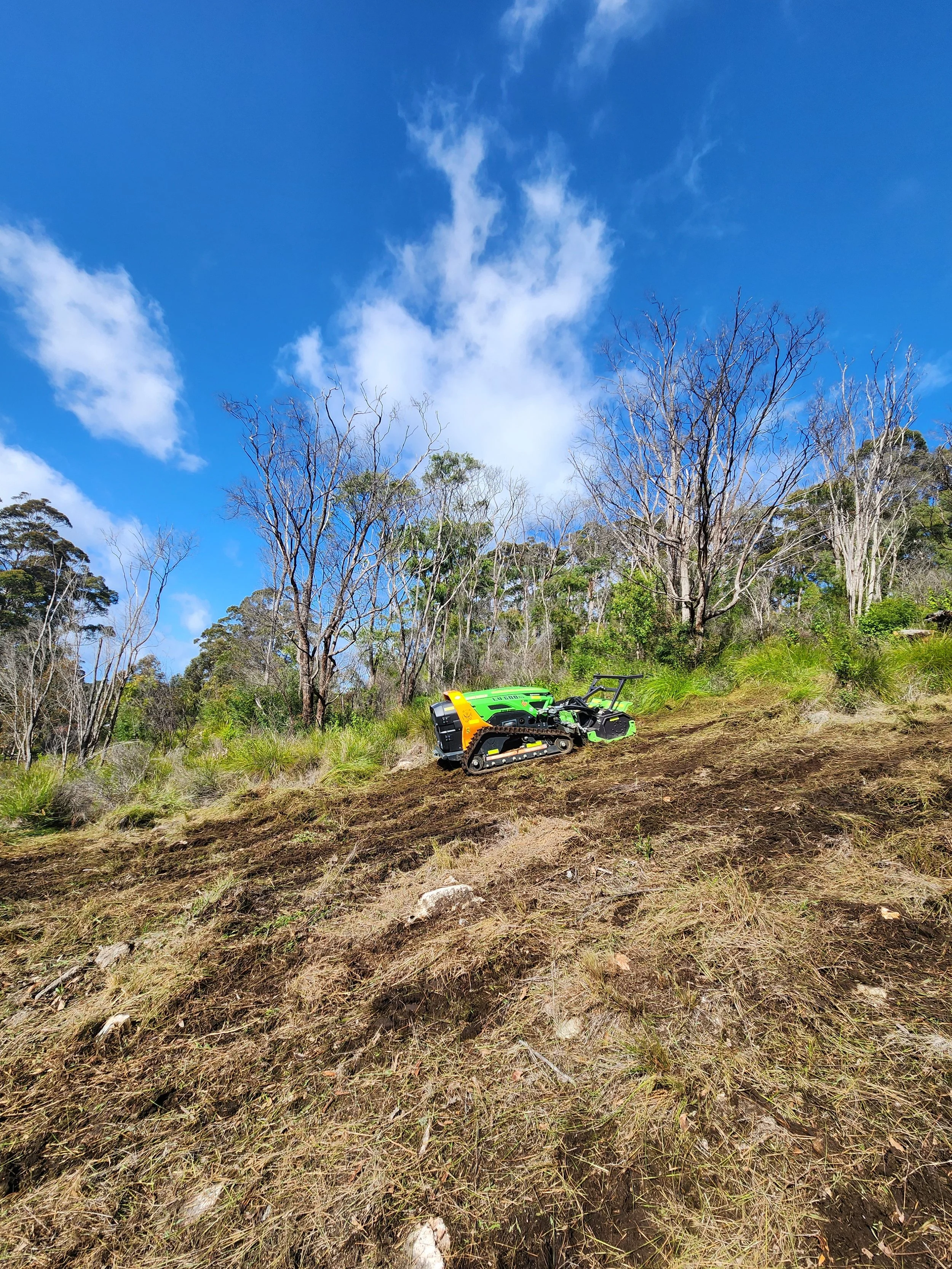
- Slopes exceed safe limits for manned plant — we operate up to 60°
- Ground is unstable, wet, or post-burn — 2.4 psi ground pressure minimises disturbance
- Operator exposure cannot be controlled through conventional means
- Access is constrained near drains, batters, embankments, or assets
- Contractor selection must be defensible — our documentation supports this
Property owner with a tricky site?
Steep slopes the ride-on can't touch. Fence lines lost to scrub. Firebreaks coming up on the inspection. The drain that hasn't been cleared in years.
ARC11 isn't just for councils and contractors. We work with private property owners across the Great Southern and beyond — same machine, same standards, faster process.
Remote-controlled operation keeps the operator off the machine and allows work to be controlled from a safer position. No operator is seated on machinery while it operates on rollover-prone terrain.
Purpose-built equipment handles terrain that would require extensive site preparation — or would simply be declined — by conventional contractors.
Ultra-low ground pressure protects sensitive and post-burn sites. Every project produces records suitable for compliance review and audit.
Why engage
a specialist?
General vegetation contractors are built for volume. ARC11 is built for the sites where volume contractors can't safely operate — and where getting it wrong carries real consequences.
On high-risk ground, the cheapest quote isn't the cheapest outcome. One rollover, one damaged asset, one audit finding — the maths changes fast.
- Direct project contact — clear communication from initial scope through to completed delivery
- Purpose-built equipment — not a conventional mower repurposed for risky terrain
- Compliance-ready documentation — SWMS, risk assessments, and insurance certificates supplied on request
- Defensible contractor selection — a paper trail that holds up to procurement and audit review
- Focused scope — we do one thing, and we do it where others can't
What we deliver.
Specialist vegetation management and mechanical bushfire mitigation where terrain, access or operator exposure makes conventional manned plant difficult to justify.
- Steep slope mowing — up to 60°, with the operator positioned off the machine. Based in the Great Southern: steep slope mowing in Albany
- Forestry mulching — scrub, regrowth, debris up to 150mm diameter
- Mechanical bushfire mitigation — firebreaks, low-fuel areas and access corridors on difficult terrain
- Embankment & corridor control — batters, rail, drainage and utility corridor vegetation management
- Drainage & waterway access — culverts, retention basins, soft ground, and road batters and council reserves
- Solar farm slopes — low-clearance, panel-adjacent operation
Managing public assets? See our vegetation management for councils and utilities.
"If you're not sure whether ARC11 is the right fit — tell us about the site. We'll give you a straight answer."
Talk to us
about your site.
We don't need a detailed brief to start a conversation. Tell us about the terrain, the access constraints, or the risk — and we'll give you a straight answer.
Send three site photos — slope, access, and vegetation — and we'll give you a direct answer on suitability within one business day.